The Parallel Pipe Solution
When two PVC pipe ends are misaligned but can be bent to run parallel to each other, two 90-degree fittings offer a simple and effective repair. Instead of forcing the pipes to meet or using expensive telescoping couplings, this method creates a clean connection that handles the offset naturally.
- No Stress on Pipes: The 90-degree turns accommodate the offset without forcing bends
- Permanent Fix: Cemented joints are as strong as the original pipe
- Inexpensive: Two 90-degree fittings cost just a few dollars
- Versatile: Works for both horizontal and vertical offsets
Tools Needed
- PVC pipe cutter or hacksaw
- Measuring tape
- Marker or pencil
- Shovel (for buried pipes)
- Rag or towel
Shop Lowe's Collection
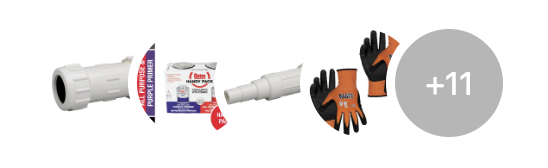 Shop All Parts at Lowe's
As a Lowe's affiliate, I earn from qualifying purchases. This does not affect your price.
Video Tutorial
Watch me demonstrate how to use 90-degree fittings to connect misaligned PVC pipes.
Why Two 90-Degree Fittings?
When pipes are offset but can be bent to run parallel, two 90-degree fittings create a simple connection:
- U-Shape or S-Shape: Two 90s form a path that bridges parallel pipes
- Adjustable Spacing: The length of pipe between the fittings determines how far apart the parallel pipes can be
- Clean Turns: 90-degree angles provide a professional, organized look
- Better Than Forcing: Eliminates stress that comes from bending pipes to meet
90-Degree vs 45-Degree Fittings
Both can solve misalignment, but they work differently:
Use 90-Degree Fittings When:
- Pipes can be bent to run parallel to each other
- You need to create a U-turn or sharp offset
- The offset is significant and requires a defined path change
Use 45-Degree Fittings When:
- Pipes are nearly aligned but just offset slightly
- You want a gradual direction change
- Flow efficiency is critical (45s cause less turbulence)
Don't Force Misaligned Pipes!
Never try to bend or force PVC pipes to meet when they're significantly misaligned. This creates stress on the joints and pipe walls, leading to cracks and leaks over time. The 90-degree fitting method eliminates all stress on the system.
1 Assess the Misalignment
Before cutting anything, understand your situation:
- Can the pipes be gently bent to run parallel?
- Measure the distance between the pipe centerlines when parallel
- Note if there's vertical offset in addition to horizontal
- Make sure you have enough pipe length to work with on both ends
The Key Question
If you can bend both pipes to point in the same direction (parallel), then 90-degree fittings are your solution. If they're offset but already pointing toward each other, consider 45-degree fittings instead.
2 Prepare the Pipe Ends
- Cut the existing pipes to create clean, square ends
- Remove any damaged sections
- Clean debris from inside and outside the pipe ends
- Make sure the pipes are dry before cementing
Leave enough length on both pipes to accept the 90-degree fittings.
3 Build the Connector Assembly
Create your 90-degree connector before installation:
- Cut a short pipe section to connect the two 90-degree fittings
- The length determines how far apart the parallel pipes can be
- Dry-fit everything first to confirm measurements
- Mark the orientation of each fitting with a marker
Pre-Assembly Tip
You can cement the two 90-degree fittings together with the connector pipe on a workbench. This makes installation easier - you'll have a single U-shaped piece to work with.
4 Dry-Fit the Complete Assembly
Test everything before using cement:
- Position the pipes parallel to each other
- Insert your pre-built 90-degree assembly
- Check that everything fits without stress or forcing
- Adjust pipe lengths or connector length if needed
- Mark all positions with a marker for reference
5 Apply Primer and Cement
Work one joint at a time:
- Apply purple primer to the first pipe end and inside the fitting
- Apply PVC cement to both primed surfaces
- Push the fitting onto the pipe with a quarter turn
- Hold for 30 seconds
- Repeat for the second pipe connection
Work Quickly!
PVC cement sets fast. If you pre-assembled your 90-degree connector, you only need to make two connections. Have everything ready before applying cement.
6 Cure and Test
Allow proper cure time before pressurizing:
- Initial set: 2 minutes - don't move the joints
- Handling: 15-30 minutes
- Pressure test: Wait at least 2 hours
- Best practice: 24 hours for full cure
Turn on water slowly and inspect all joints for leaks before backfilling.
When to Use 90-Degree Fittings
- Parallel offset pipes: When pipes can be bent to run in the same direction
- Significant height differences: When one pipe is much higher than the other
- Obstacle routing: When you need to go around a rock, root, or other obstruction
- Clean appearance: When you want organized, professional-looking turns
- Valve box connections: Creating organized pipe runs into valve assemblies
Common Mistakes to Avoid
- Not dry-fitting first: Always test the assembly before cementing
- Wrong method choice: If pipes point toward each other (not parallel), use 45s instead
- Connector too short: Make sure the pipe between 90s is long enough for your offset
- Forgetting to mark positions: Mark fitting orientations during dry-fit
- Rushing the cement: You have seconds to position fittings correctly
- Wet pipes: Cement won't bond to wet surfaces - dry everything first
Get Your Supplies at Lowe's
90-degree fittings, cement, primer, and all the supplies you need for misaligned pipe repairs.
Shop PVC Pipe Repair Collection
As a Lowe's affiliate, I earn from qualifying purchases. Prices and availability may vary.